
Exterior Lighting in West Bath for pathways, driveways, and building perimeters that require nighttime visibility
Tripping hazards on unlit walkways, dark entryways, and invisible driveway edges create safety concerns once the sun sets. Electric Moose handles exterior lighting installation throughout West Bath, including wall-mounted fixtures beside doors, post lights along paths, flood lights for yards and garages, and low-voltage landscape systems that highlight plantings and architectural features. Maine's long winter nights and early sunsets make reliable outdoor lighting essential from October through March, when most people arrive home in darkness.
Exterior lighting installation requires weatherproof junction boxes, conduit or direct-burial cable rated for underground runs, and GFCI protection for all outdoor circuits. Fixtures must withstand freeze-thaw cycles, coastal humidity, and potential snow load on wall-mounted housings. The wiring method depends on the fixture location—surface conduit for exposed walls, trenched cable for pathway lights, and overhead runs from eaves to detached structures.
Schedule a property walkthrough to identify high-priority lighting locations and evaluate power source options for each area.
What Changes After Lighting Installation
The process involves mounting weatherproof boxes to exterior walls or posts, running cable from an existing circuit or new dedicated circuit at the panel, and connecting fixtures with silicone-sealed wire nuts inside waterproof enclosures. Photocell controls automate dusk-to-dawn operation, while motion sensors activate lights only when movement is detected, reducing runtime and extending bulb life. Timer switches provide scheduled operation for predictable lighting during specific evening hours.
Once complete, you'll see clear definition of walkway edges and steps, even illumination across entry areas that eliminates shadows where someone could approach unseen, and sufficient light in driveways for maneuvering vehicles without guesswork. LED flood lights now provide the same brightness as older halogen fixtures while drawing a fraction of the wattage, reducing the electrical load and allowing more fixtures per circuit. The shift from incandescent to LED also means fewer bulb changes, particularly important for fixtures mounted high on walls or under eaves.
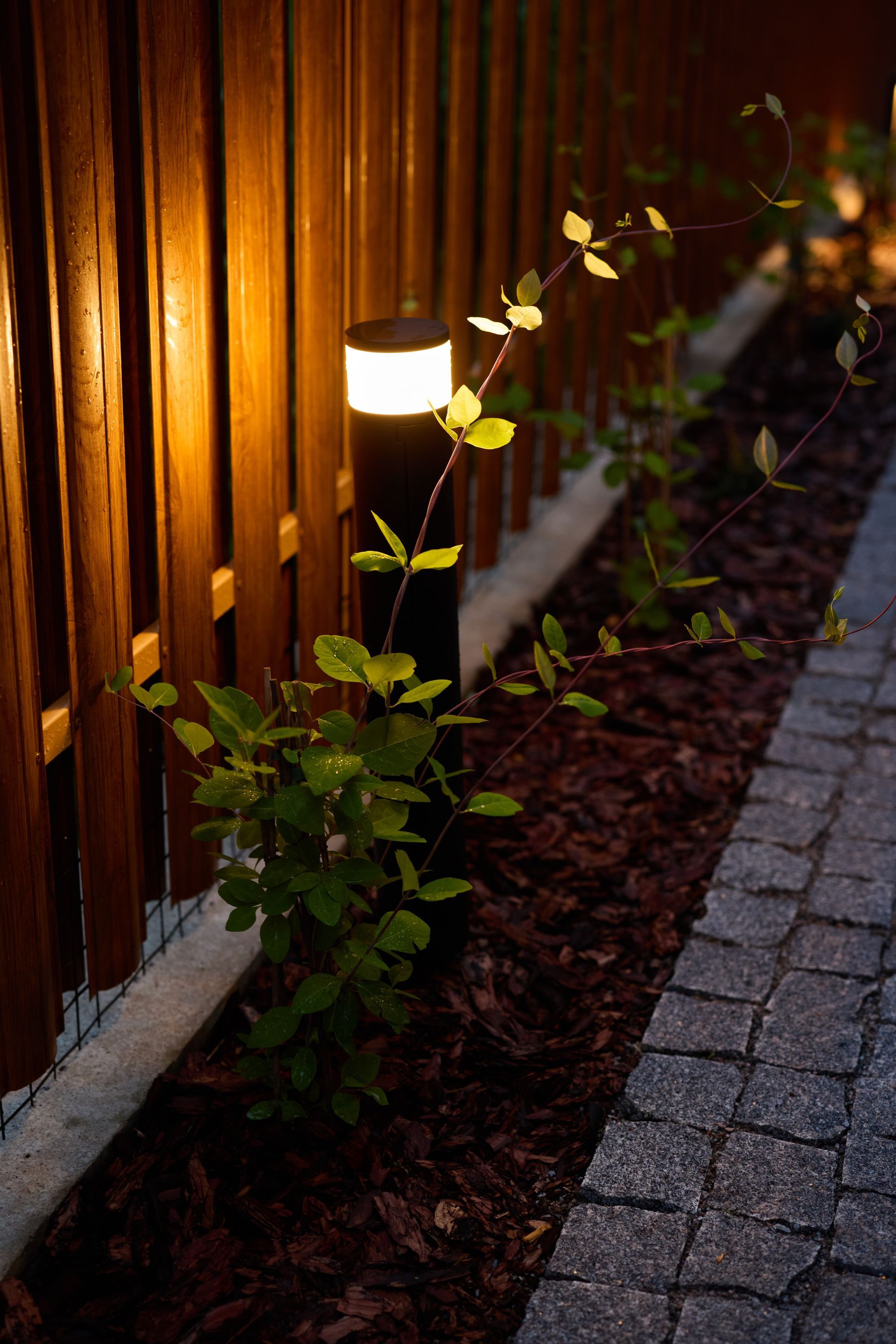
Low-voltage landscape lighting operates on 12-volt transformers, reducing shock risk and allowing DIY fixture repositioning, but the transformer must be sized correctly for the total wattage of all connected lights. Line-voltage fixtures connect directly to household circuits at 120 volts, providing brighter output for security applications and larger areas. Coastal properties in West Bath face additional corrosion concerns, requiring marine-grade fixtures or corrosion-resistant coatings on standard housings exposed to salt air..
Common Questions About This Service
Exterior lighting projects involve different materials and methods than indoor work, prompting specific questions about installation durability and control options.
How deep must cable be buried for pathway lights?
Direct-burial cable rated for wet locations requires 12 inches of cover in most residential applications, with deeper burial or conduit protection needed where vehicle traffic crosses the trench or where frost heave is a concern in West Bath's freeze-thaw cycles.
What's the difference between motion-activated and dusk-to-dawn fixtures?
Motion sensors turn lights on only when movement triggers the detector, conserving energy but requiring proper aim to cover desired areas, while photocell controls activate at sunset and remain on until sunrise, providing constant illumination throughout dark hours.
Why do outdoor fixtures corrode faster near the coast?
Salt spray accelerates oxidation on metal housings and electrical connections, requiring stainless steel or powder-coated aluminum fixtures with sealed gaskets that prevent moisture intrusion, a consideration for any West Bath property within a few miles of tidal water.
How many fixtures can one circuit handle?
A 15-amp outdoor circuit supports approximately 1,400 watts of lighting, but LED fixtures now draw so little power that fixture count is usually limited by physical spacing and coverage needs rather than electrical capacity.
When should separate circuits be added for outdoor lighting?
Detached garages, workshop buildings, or extensive landscape lighting systems benefit from dedicated circuits that prevent nuisance tripping and allow independent control without affecting interior lighting or other outdoor receptacles.
Electric Moose installs exterior lighting systems designed for Maine weather and coastal conditions. Contact us to review your property layout and discuss fixture placement that addresses both safety and visibility priorities after dark.